Why Laravel?
Laravel is a good fit when you want to get a system up and running quickly while also having a stable foundation to build on. It is often a good choice for projects where business logic, security, and the ability to carry out further development are more important than building every part of the infrastructure from scratch.
This can include everything from customer portals and membership systems to internal business systems, booking flows, or websites with a CMS at their core. Laravel also works well with modern frontend frameworks such as React, for example via Inertia, for those who want a modern user experience without building a separate API.
We help you assess whether Laravel or, for example, .NET is the right way forward based on the project's requirements, existing infrastructure, and what needs to be built on over time.

Stable framework with good performance
A common misconception is that PHP and Laravel automatically mean a less modern or lower-performing solution. In practice, Laravel is one of the most widely used frameworks in the world and powers everything from smaller websites to high-traffic systems, thanks to built-in support for features such as caching, queue management, and scheduled jobs.
This allows us to build systems with high performance, a clear structure, and code that is easy for most PHP developers to understand. When parts of the system need to be adapted, we handle that during development, while the framework's ready-made components and features save time in other areas.
Efficient development and easier maintenance
One of Laravel's greatest advantages is that the framework solves many recurring problems and development steps, such as authentication, permissions, and database management through Eloquent. In addition to making development more efficient, this also makes maintenance, testing, and further development easier over time.
For you as a client, this often means it becomes easier to prioritize features, plan releases, and build on the system step by step. Instead of maintaining custom-built infrastructure, you can often rely on a framework that is already well-proven and actively developed.
Integrations and APIs
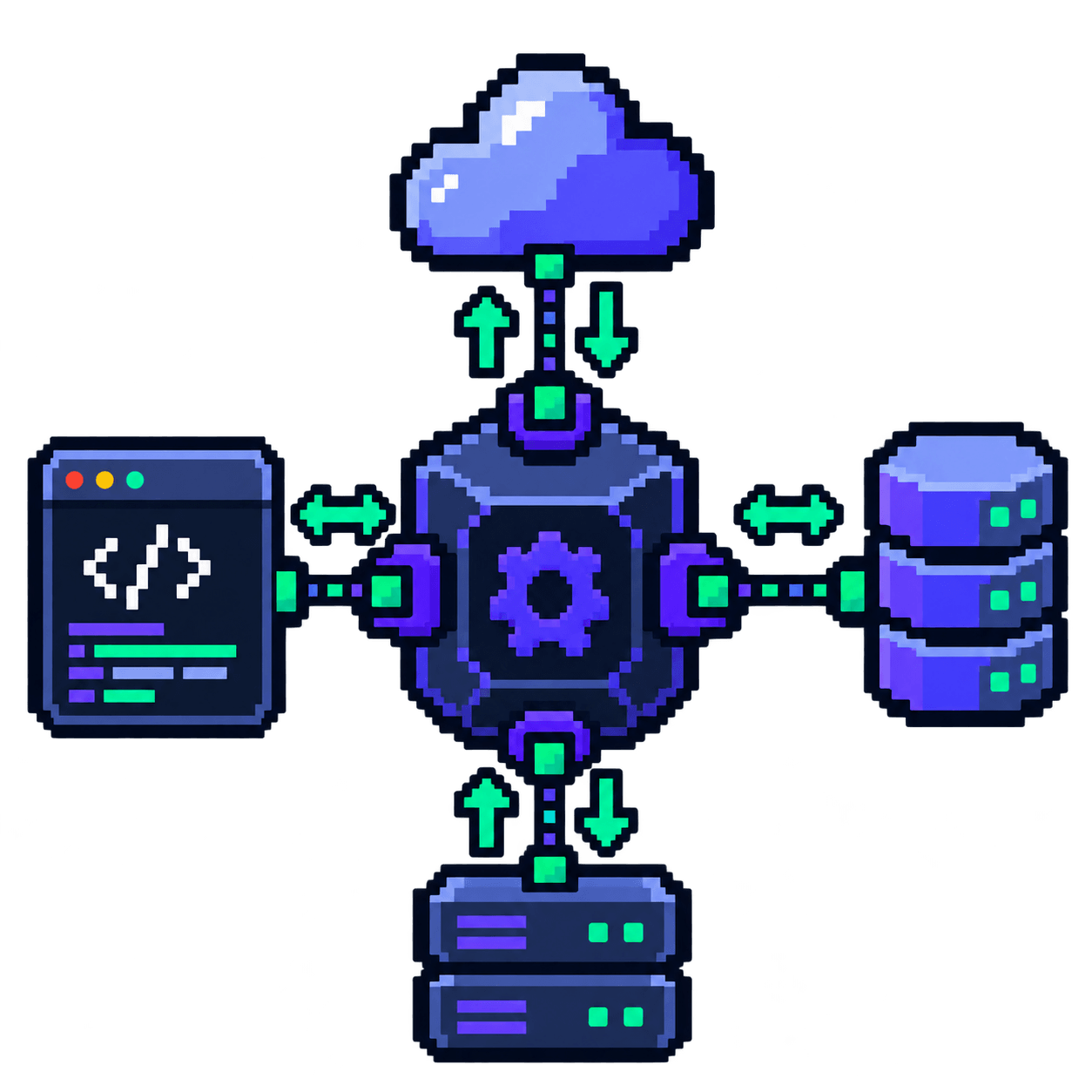
A system often needs to communicate with other systems or services. We develop Laravel solutions that can communicate with APIs, internal systems, and external services. This can include everything from login, payments, and business logic to notifications, queue systems, or other integrations the organization needs.
This is often where the real value of the system emerges. We therefore see Laravel as part of a larger whole, where the solution needs to work together with the frontend, integrations, and other processes—something that is made easier by Laravel's large ecosystem of ready-made packages.
How we work with Laravel
For us, Laravel is not just a technology choice, but a way of working that is well suited to building sustainable, high-quality systems. It enables us to deliver value early in the project without making the cost unnecessarily high.
We handle everything from preliminary studies and technical consulting to development, integrations, testing, operations, and further development. If you already have a system or an existing codebase, we can also take it over, modernize it, and build on it.
Frequently Asked Questions
What is Laravel?
Laravel is a PHP framework that Itiden uses to develop websites, web applications, and systems built to last, with a focus on stability, security, and cost-effectiveness.
What is Laravel well suited for?
Laravel is well suited for customer portals, membership systems, business systems, booking flows, and websites with a CMS, especially when business logic and security are prioritized over building everything from scratch.
Can Laravel be used together with React?
Yes, Laravel works well together with modern frontend frameworks such as React, for example via Inertia.
What makes Laravel efficient to develop with?
The framework solves recurring problems such as authentication, permissions, and database management through Eloquent, which speeds up both development and maintenance.
Can Laravel be integrated with other systems?
Yes, Laravel can communicate with APIs, external services, and internal systems, which Itiden highlights as one of the areas where the real value often emerges.